
Choosing the Right Deck Material for Your New England Home
Not every material performs the same in our climate. This guide explains your options honestly—so you can choose what fits your lifestyle, not just your budget.
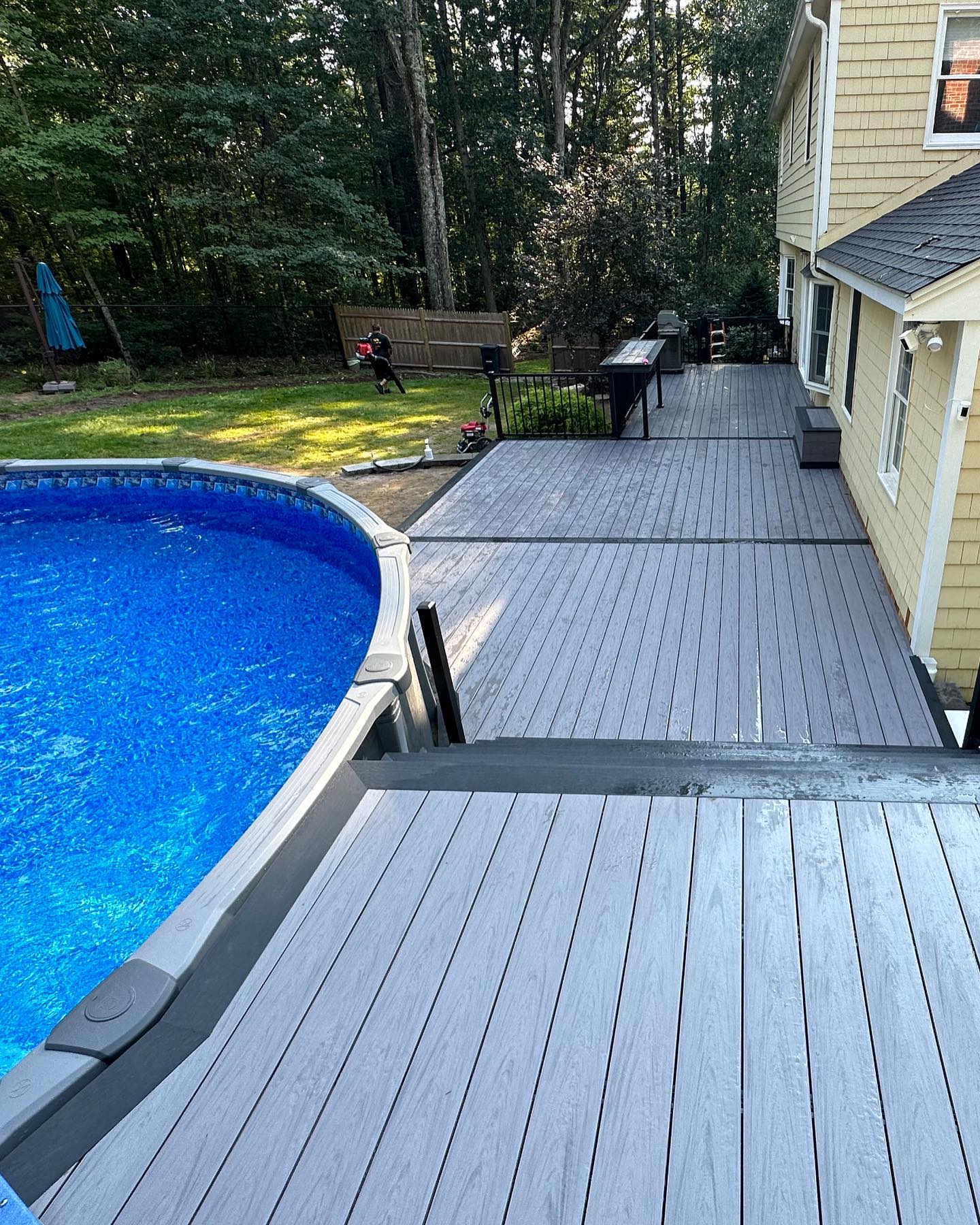
Why Material Choice Matters in New England
The deck material that works in Arizona won't necessarily hold up in New Hampshire. Our climate presents unique challenges that affect long-term performance.
Freeze-Thaw Cycles
100+ freeze-thaw cycles per year cause expansion and contraction that stress materials differently. Some handle it gracefully; others crack, warp, or split.
Moisture & Humidity
From coastal humidity to standing snow, New England decks face constant moisture exposure. Material choice determines whether you're fighting rot or enjoying your deck.
Snow Load & Seasonal Use
Heavy snow sits on decks for months. Some materials shrug it off; others absorb moisture that causes problems in spring.
Long-Term vs. Short-Term Value
Cheaper materials often cost more over 15-20 years when you factor in maintenance, repairs, and early replacement.
Understanding these factors helps you make a choice you'll be confident in for decades—not just at the point of purchase.
Deck Material Options at a Glance
Here's a neutral overview of the materials available for deck construction in our region.
| Material | Lifespan | Maintenance | Initial Cost | Best For |
|---|---|---|---|---|
| Composite Decking | 25-50 years | Low (occasional cleaning) | Higher | Homeowners who want lasting value without ongoing work |
| Pressure-Treated Wood | 15-20 years | Medium-High (stain every 2-3 years) | Lower | Budget-conscious homeowners willing to maintain |
| Cedar & Premium Woods | 20-30 years | Medium (annual treatment recommended) | Medium-High | Homeowners who value natural aesthetics |
| PVC/Synthetic | 25-50 years | Very Low | Highest | Pool surrounds, high-moisture areas |
Composite Decking
Pressure-Treated Wood
Cedar & Premium Woods
PVC/Synthetic
Note: No single material is "best" for everyone. The right choice depends on your priorities, budget, and how you plan to use your deck.
Want a detailed side-by-side breakdown? See our full composite vs wood comparison →
Concerned about our climate? Read our New England weather guide →
Tired of deck maintenance? Explore low-maintenance options →
Planning complex railings? Read our railing selection guide →
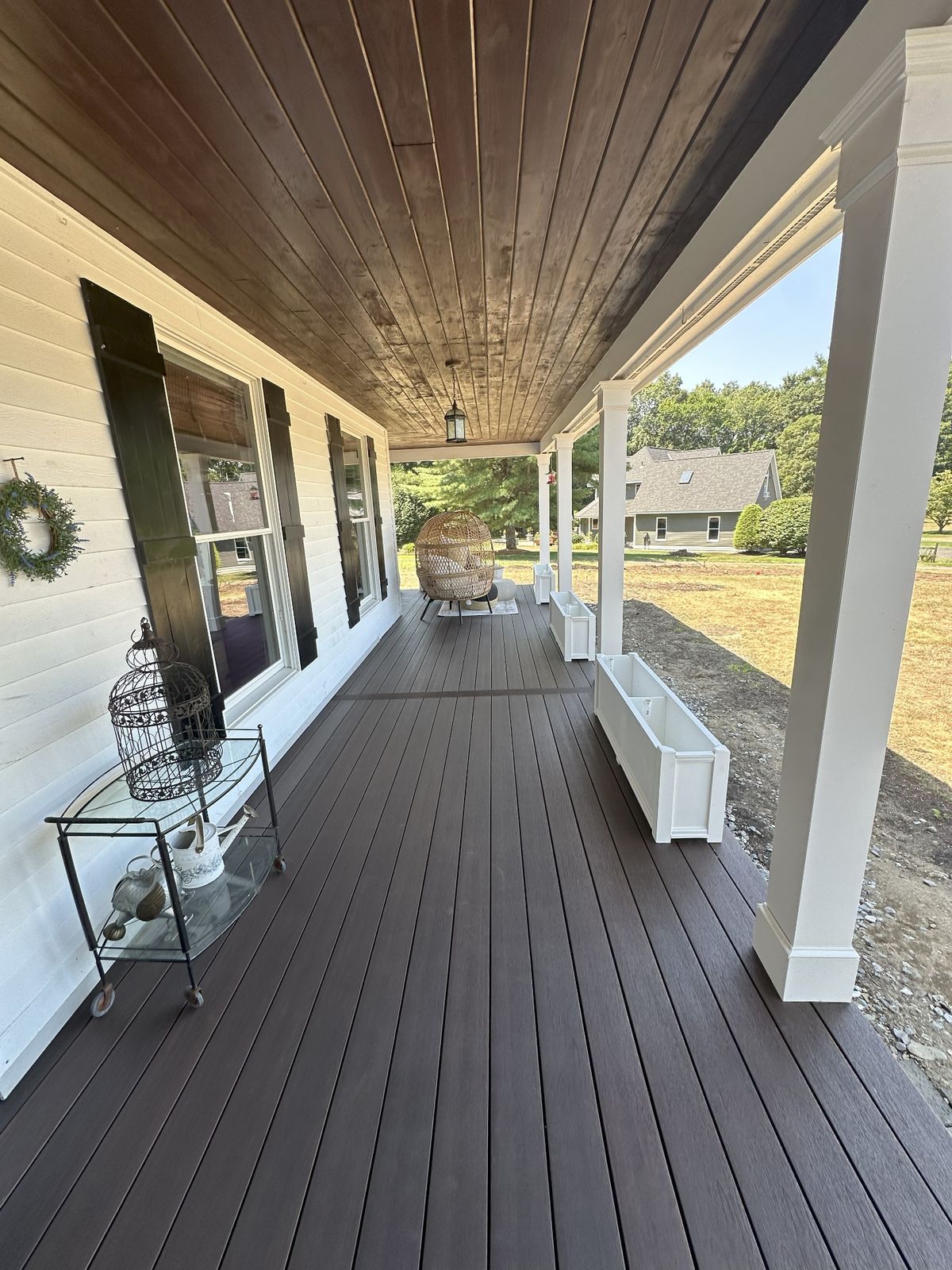
Composite Decking
Composite decking combines wood fibers with plastic polymers to create boards that resist rot, fading, and insect damage. Premium "capped" composites add a protective shell that handles New England weather exceptionally well.
Key Benefits
- No staining, sealing, or painting required
- Consistent appearance without warping or grain variation
- 25-50 year lifespan with manufacturer warranties
- Resists fading, staining, and moisture absorption
- Splinter-free surface ideal for barefoot use
Considerations
- Higher initial investment than pressure-treated wood
- Can feel warmer underfoot in direct sunlight
- Doesn't replicate the exact look and feel of natural wood
Wood Decking
Wood remains the classic choice for deck construction. Pressure-treated pine is the most common, while cedar and tropical hardwoods offer natural beauty and improved durability for those willing to invest.
Key Benefits
- Authentic natural appearance and warmth underfoot
- Lower initial cost (especially pressure-treated)
- Can be sanded and refinished to look new again
- Individual boards easily replaced if damaged
- Traditional aesthetic that complements New England architecture
Considerations
- Requires regular staining/sealing every 2-3 years
- Susceptible to warping, splitting, and rot without maintenance
- Splinters possible, especially as wood ages
- Shorter lifespan than composite when maintenance is neglected
Wood Types
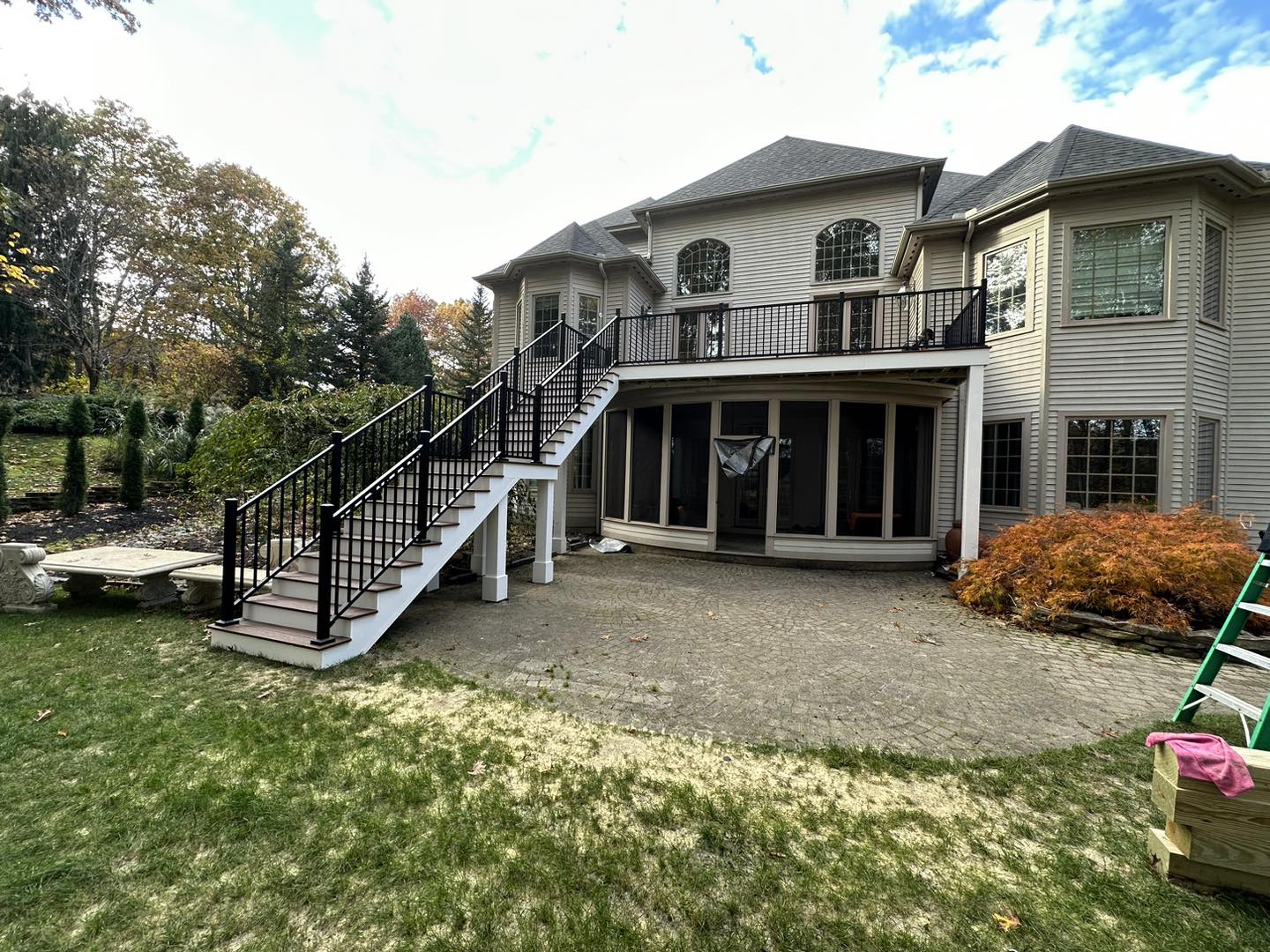
Railings, Stairs & Finishing Details
Material choice doesn't stop at the deck surface. Railings, stairs, and finishing details affect safety, code compliance, and overall design.
Railing Options
Aluminum Railings
Low maintenance, code-compliant, available in black, white, and bronze. Popular for modern and traditional designs alike.
Cable Railings
Minimal visual obstruction, contemporary aesthetic. Requires specific spacing to meet code.
Wood Railings
Traditional look, can match deck material. Requires ongoing maintenance like the deck surface.
Glass Panels
Maximum view preservation, premium appearance. Higher cost and installation complexity.
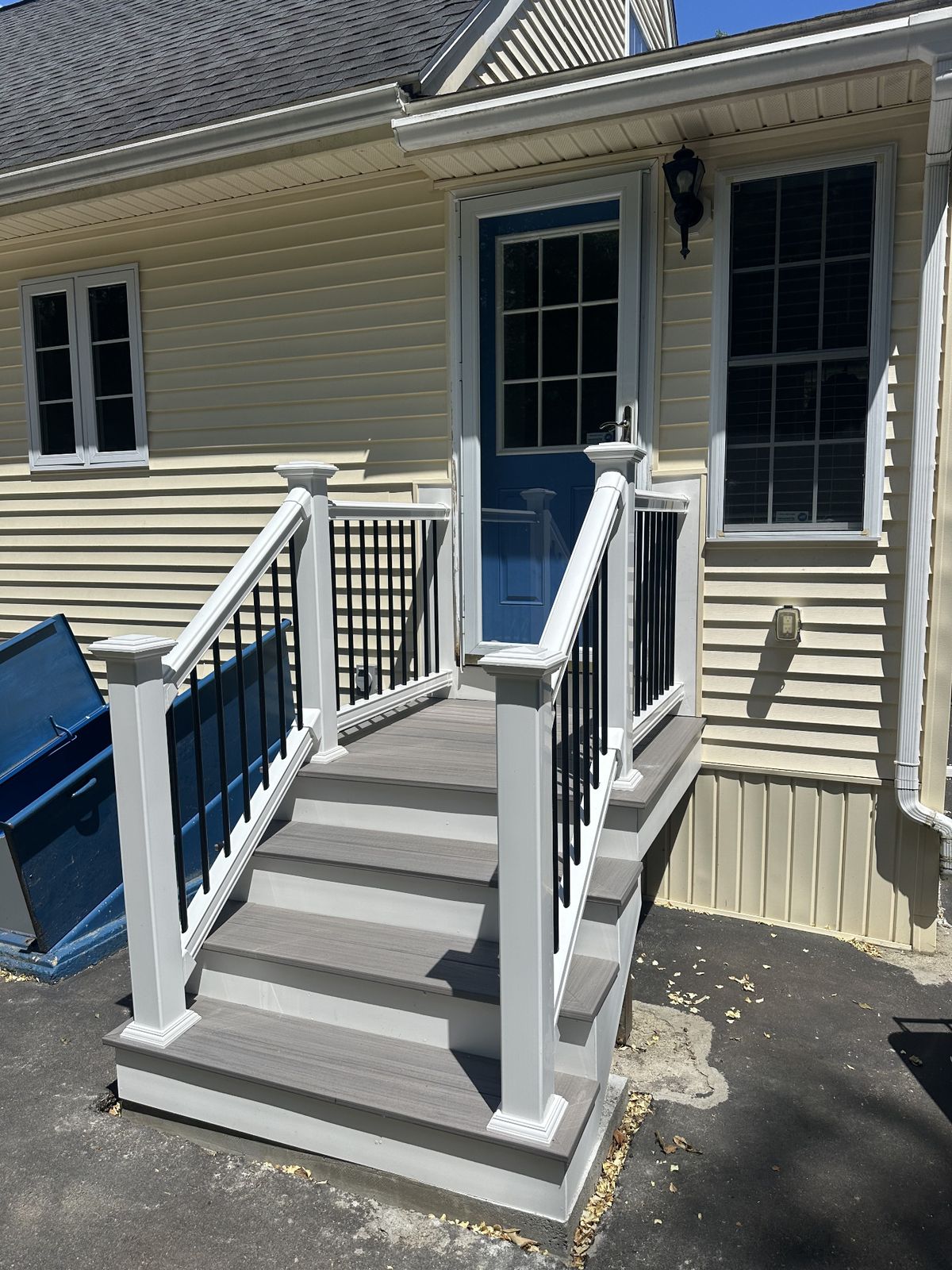
Code Requirements
- • Railing height: 36" minimum for residential, 42" for commercial or above certain heights
- • Baluster spacing: 4" maximum gap
- • Pool barrier requirements differ from standard deck railings
- • Stair handrails have specific height and graspability requirements
Don't Forget Lighting
Integrated post lights, riser lights, and ambient lighting improve safety and extend usable hours. Planning for lighting during design avoids costly retrofits later.
How Deck Pros Helps You Choose
We don't push materials—we help you understand trade-offs so you make the choice that fits your lifestyle.
"The goal isn't to sell you the most expensive option—it's to build a deck you'll love for years."
Listen to Your Priorities
We start by understanding how you use your outdoor space, your maintenance tolerance, and your long-term goals.
Assess Your Site
Some properties benefit from specific materials due to sun exposure, moisture levels, or architectural style.
Explain Trade-offs Honestly
We'll tell you where composite excels and where wood might be the better choice—without sales pressure.
Present Options at Your Budget
Whether you're investing in premium materials or working within constraints, we present realistic options.
Let You Decide
Ultimately, it's your deck. We provide expertise; you make the call.
Frequently Asked Questions
Get clear answers to common questions from homeowners in Derry, Londonderry, Salem and Windham. If you don't see your question here, we're happy to discuss it.
Not Sure Which Material Is Right for You?
We're happy to walk through options during a no-pressure consultation. No sales pitch—just honest guidance based on your property and priorities.