
Composite vs Wood Decking: An Honest Comparison for New England Homeowners
Composite costs more up front but needs almost no upkeep, while wood costs less initially and needs regular staining in New England. This guide compares them honestly so you can choose based on your priorities, not marketing claims.
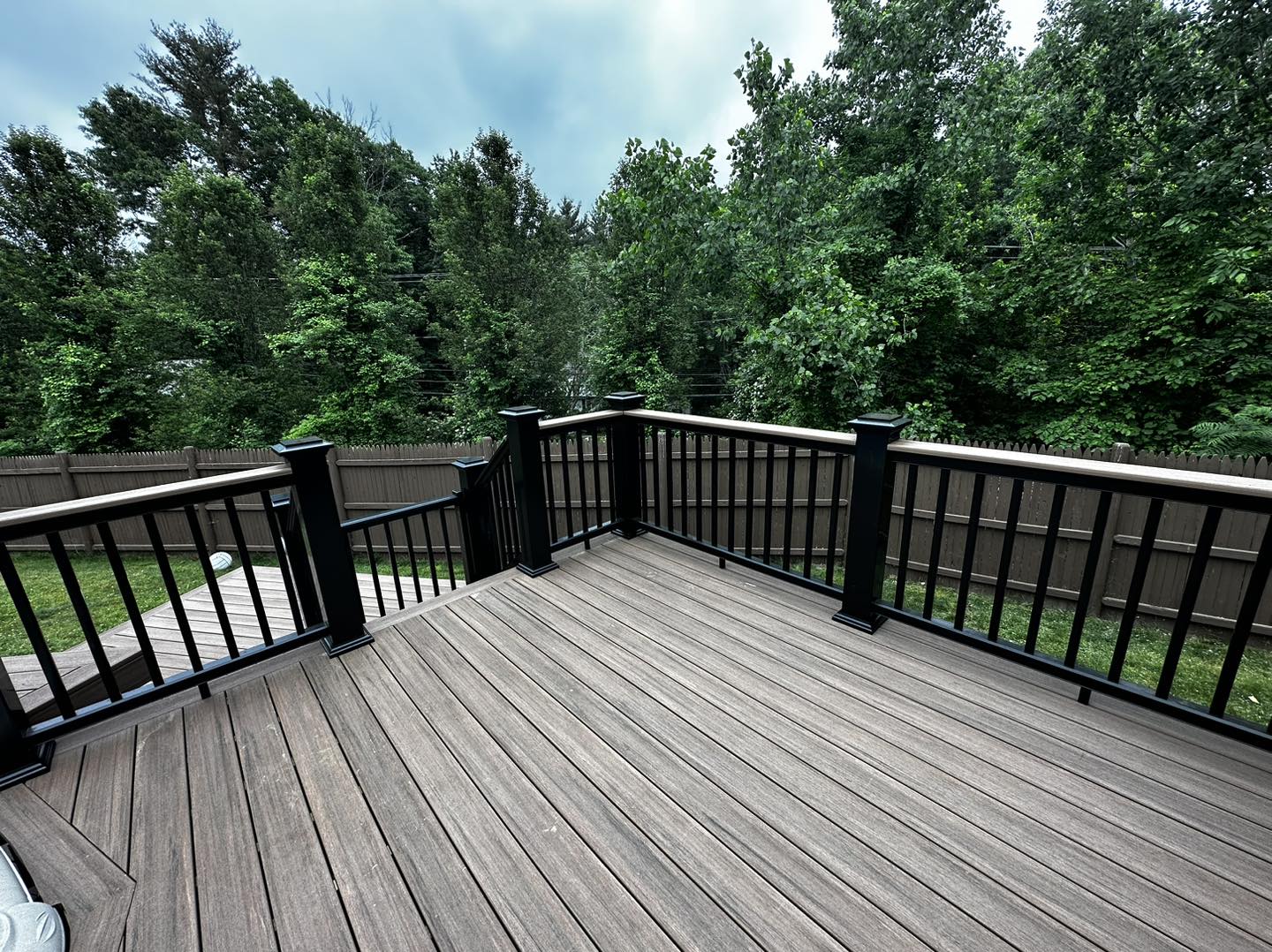
Quick Comparison
| Factor | Composite | Wood |
|---|---|---|
| Lifespan | 25-50 years | 15-25 years (with maintenance) |
| Maintenance | Occasional cleaning | Stain/seal every 2-3 years |
| Initial Cost | Higher ($45-85/sq ft installed) | Lower ($25-45/sq ft installed) |
| Long-Term Cost | Lower (no ongoing materials) | Higher (stain, sealer, repairs) |
| Appearance | Consistent, uniform | Natural grain, character, variation |
| Feel Underfoot | Warmer in sun, splinter-free | Cooler, natural texture |
| Repairability | Board replacement only | Sand, refinish, or replace boards |
| Environmental | Recycled content, long life | Natural material, shorter life |
Lifespan
Maintenance
Initial Cost
Long-Term Cost
Appearance
Feel Underfoot
Repairability
Environmental
Cost estimates are general ranges for Southern NH. Actual pricing depends on deck size, site conditions, and material selection.
How Each Material Handles New England Weather
Our climate tests deck materials harder than most regions. Here's how composite and wood respond to our specific conditions.
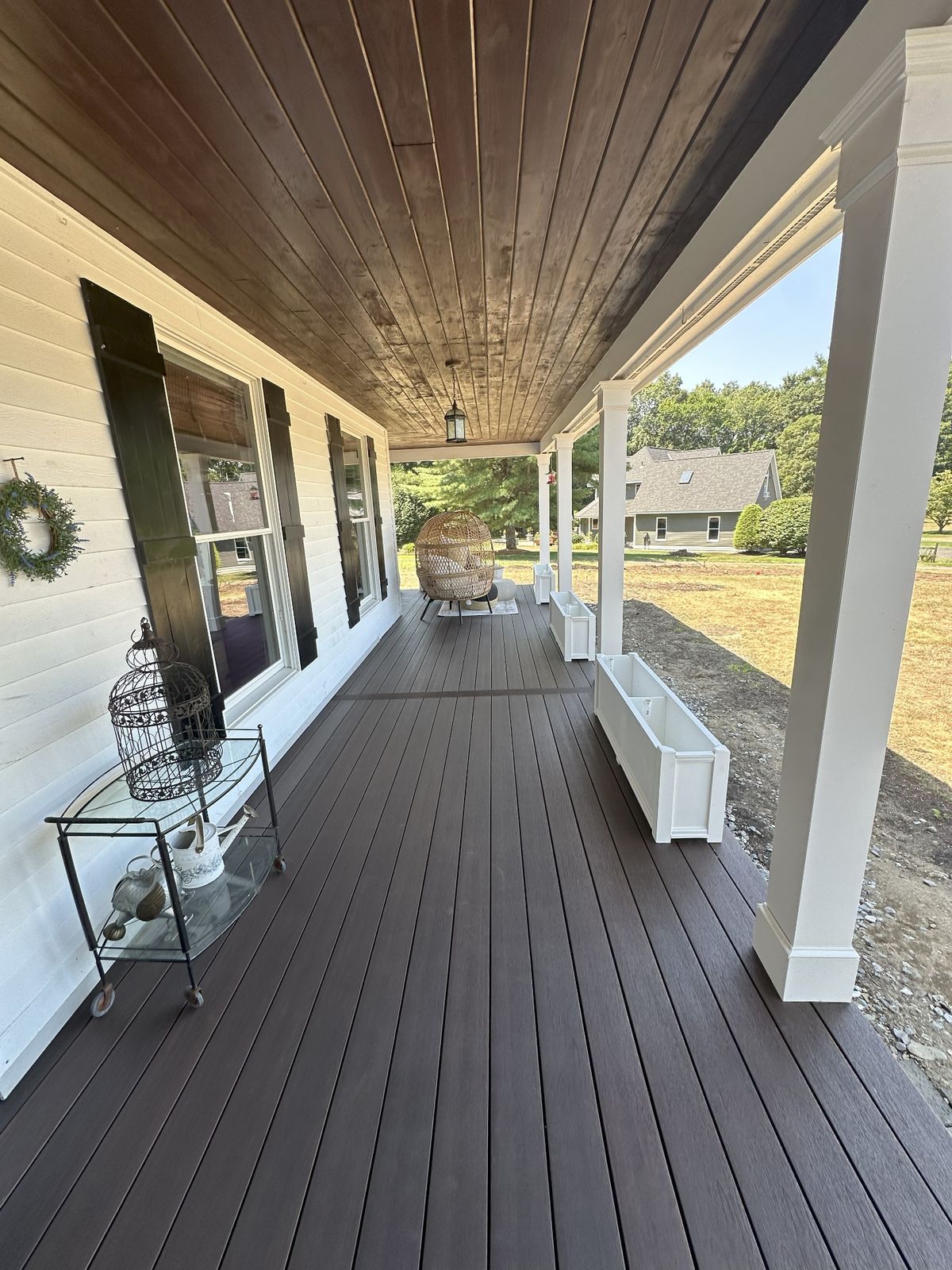
Composite Performance
- Freeze-thaw cycles: Capped composites resist moisture absorption that causes cracking
- Humidity & moisture: Won't rot, warp, or mold even in coastal areas
- Snow load: Sheds moisture as snow melts; no absorption damage
- UV exposure: Modern composites include UV inhibitors; some fading in first year
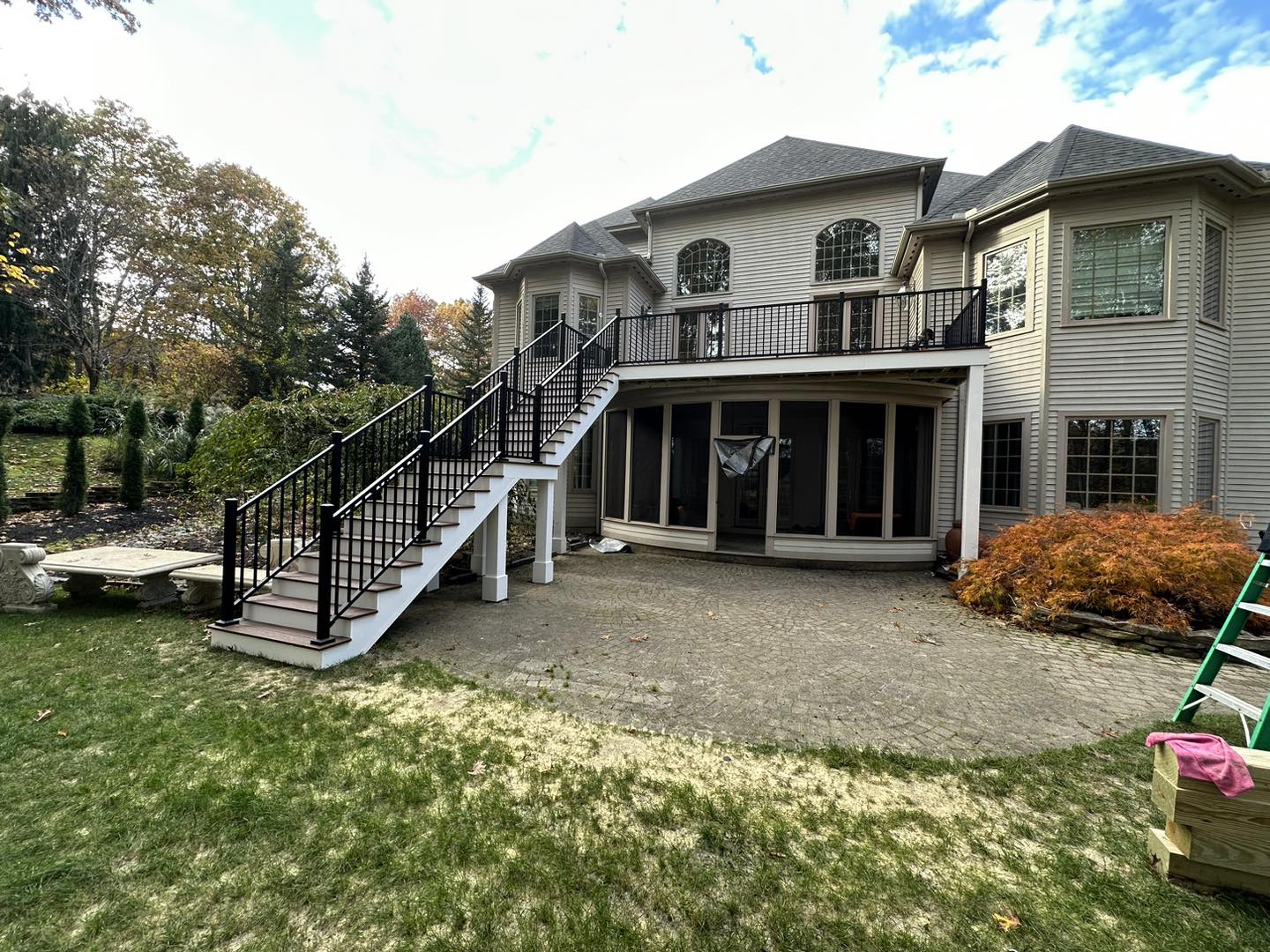
Wood Performance
- Freeze-thaw cycles: Absorbed moisture expands/contracts; can cause checking and splitting
- Humidity & moisture: Susceptible to rot without regular sealing; cedar more resistant
- Snow load: Must drain and dry properly; sitting moisture accelerates decay
- UV exposure: Will gray naturally without stain; must be refinished to maintain color
Neither material is immune to our weather—but composite requires less intervention to maintain performance. See our complete New England weather guide →
What Maintenance Actually Looks Like
Composite Maintenance
Wood Maintenance
"If you genuinely enjoy maintaining outdoor spaces, wood maintenance can be satisfying. If it feels like a chore you'll postpone, composite is the honest choice."
Initial Investment vs. Total Cost of Ownership
Initial Cost Comparison
- Composite$45-85/sq ft installed
- Pressure-Treated Wood$25-35/sq ft installed
- Cedar$35-50/sq ft installed
20-Year Projection (400 sq ft)
| Cost Category | Composite | PT Wood |
|---|---|---|
| Initial build | ~$26,000 | ~$12,000 |
| Maintenance (20 yrs) | ~$200 | ~$3,500 |
| Board replacements | Unlikely | ~$1,500 |
| Total estimated | ~$26,200 | ~$17,000+ |
Wood still costs less overall if you maintain it yourself. Composite makes sense if you value time over money or won't realistically keep up with maintenance.
Which Material Fits Your Life?
Composite is likely right if...
- You want to use your deck, not maintain it
- You value consistent appearance over natural variation
- You're investing in a home you'll stay in 10+ years
- Your deck sees heavy use or poolside moisture
- Budget allows higher initial investment
Wood is likely right if...
- You love the look and feel of natural materials
- You find satisfaction in caring for outdoor spaces
- You want lower initial cost and are committed to maintenance
- Your deck complements traditional New England architecture
- You prefer materials you can sand and refinish
Frequently Asked Questions
Get clear answers to common questions from homeowners in Derry, Londonderry, Salem and Windham. If you don't see your question here, we're happy to discuss it.
Still Weighing Your Options?
We're happy to discuss the trade-offs during a no-pressure conversation. Tell us about your project, and we'll help you think through what makes sense.