
Best Decking Materials for New England Weather
Capped composite and PVC decking hold up best to New Hampshire's freeze-thaw cycles, snow and summer humidity, with cedar a strong choice for wood. Here is what actually lasts, based on nearly 20 years of building in Southern NH.
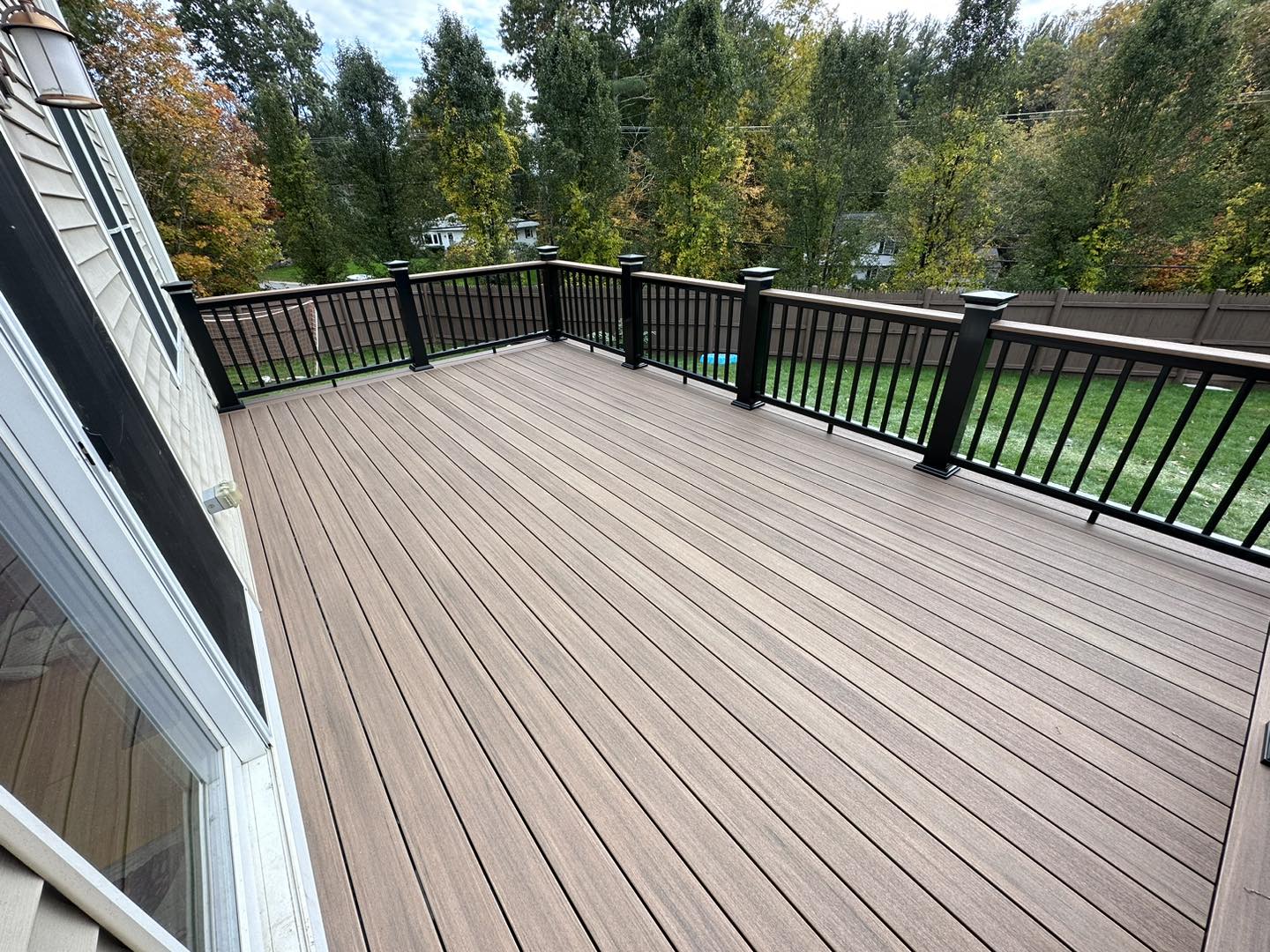
What New England Weather Does to Decks
A deck that performs well in North Carolina or California may fail within years here. Our specific combination of climate factors creates unique stresses that many materials simply aren't designed to handle.
100+ Freeze-Thaw Cycles Annually
Water infiltrates materials, freezes, expands, thaws, and refreezes. This cyclical stress causes checking, splitting, and structural fatigue. Materials must either shed water completely or tolerate expansion.
Extended Snow Load & Standing Moisture
Snow sits on decks for months, not days. As it melts and refreezes, moisture works into every gap. Boards that absorb moisture fail faster; proper drainage is critical.
Coastal & Inland Humidity Variations
Coastal Seacoast NH areas see salt air and sustained humidity. Inland Southern NH areas experience more extreme temperature swings. Material selection should account for your specific microclimate.
Intense UV Exposure Despite Cold Winters
Clear winter days reflect UV off snow, accelerating fade. Summer sun is direct and harsh at our latitude. UV protection is year-round, not just a summer concern.
How Materials Handle Freeze-Thaw Cycles
This is the single most important factor for New England decking. Materials that absorb water and then freeze will eventually fail—it's a matter of when, not if.
| Material | Rating | Why It Performs This Way |
|---|---|---|
| Capped Composite | Excellent | Cap layer prevents moisture penetration; core can't absorb water to freeze |
| PVC/Synthetic | Excellent | Contains no organic material; moisture has nowhere to go |
| Cedar | Good | Natural oils provide some water resistance; still requires sealing |
| Pressure-Treated Pine | Fair | Treatment prevents rot but doesn't stop water absorption; checking common |
| Untreated Wood | Poor | Rapid moisture cycling leads to checking, splitting, and early failure |
Capped Composite
ExcellentCap layer prevents moisture penetration; core can't absorb water to freeze
PVC/Synthetic
ExcellentContains no organic material; moisture has nowhere to go
Cedar
GoodNatural oils provide some water resistance; still requires sealing
Pressure-Treated Pine
FairTreatment prevents rot but doesn't stop water absorption; checking common
Untreated Wood
PoorRapid moisture cycling leads to checking, splitting, and early failure
Expert Note: We've replaced countless pressure-treated decks that failed not from rot, but from repeated freeze-thaw damage. The treatment prevents decay but doesn't address the mechanical stress of frozen water expanding inside the wood fibers.
Moisture Resistance: The Foundation of Longevity
In New England, moisture is constant—from snow melt to spring rain to summer humidity. How a material handles moisture determines whether you're building for 15 years or 50.
High Moisture Resistance
- PVC Decking: Zero water absorption; ideal for pool decks and coastal locations
- Capped Composite: Protective shell prevents moisture reaching the core
- Tropical Hardwoods: Extremely dense; naturally sheds water
Moderate Moisture Resistance
- Cedar: Natural oils resist moisture; requires resealing every 2-3 years
- Redwood: Similar to cedar; less common in our region
Requires Active Protection
- Pressure-Treated Pine: Treatment prevents rot but wood still absorbs water; must be sealed regularly
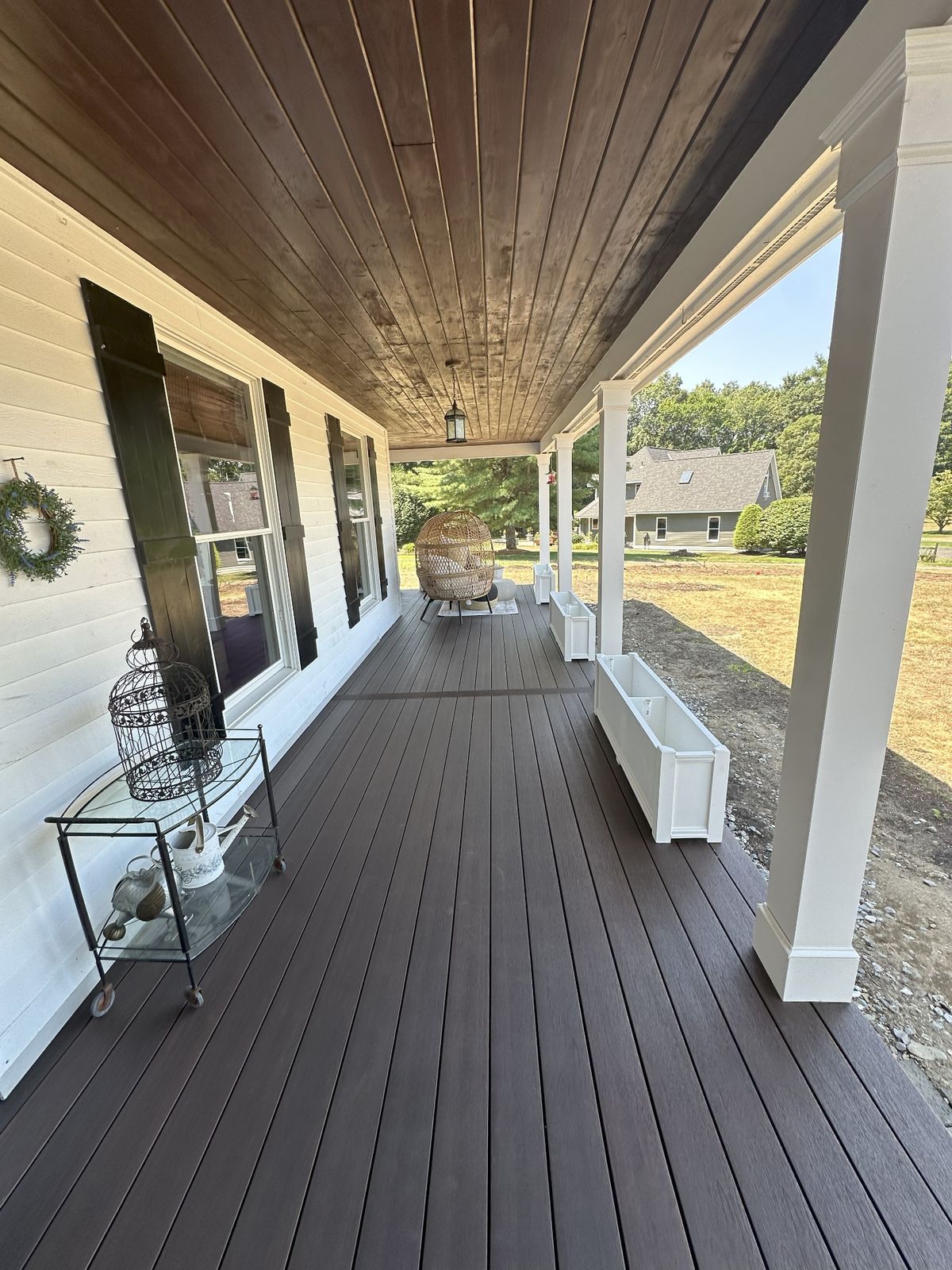
Coastal Consideration: Seacoast NH properties face additional salt air exposure. For waterfront or near-coast homes, we typically recommend fully synthetic materials that won't corrode or absorb salt-laden moisture.
Living With Snow: Practical Material Considerations
Snow removal isn't optional here—it's a regular winter activity. Your deck material should tolerate shoveling, ice melt, and months of sitting moisture without damage.
Surface Hardness & Scratch Resistance
Composite and PVC resist shovel scratches better than most wood. Cedar and pine will show wear from regular snow removal. Plastic shovels are gentler; metal shovels can damage any surface.
Ice Melt Compatibility
Calcium chloride is safest for most decking materials. Rock salt can accelerate fading on some composites. Avoid potassium chloride on pressure-treated wood. Check manufacturer recommendations for your specific material.
Drainage & Melt Patterns
Proper board spacing (1/8" to 1/4") allows melt water to drain. Joist covers protect structural members from standing water. Slight pitch away from house prevents pooling at the ledger.
Expansion Gaps
All materials expand and contract with temperature. Proper gapping prevents buckling in summer and cracking in winter. Factory-trained installers know the specific requirements for each material.
Practical advice: If you have a deck now, watch where water pools as snow melts. These areas will be problem spots for any new deck if drainage isn't addressed in the design.
Realistic Lifespan in Our Climate
National marketing materials often quote lifespan figures based on ideal conditions. Here's what we actually see in Southern New Hampshire after 20 years of building and maintaining decks.
| Material | Expected Lifespan | Maintenance Required | Our Observation |
|---|---|---|---|
| PVC/Synthetic | 30-50 years | Periodic cleaning | Longest-lasting option we install; minimal degradation |
| Capped Composite | 25-40 years | Periodic cleaning | Excellent performance; slight fading in first year is normal |
| Uncapped Composite | 15-25 years | More frequent cleaning | Earlier generation; newer capped products are superior |
| Cedar (maintained) | 20-25 years | Annual treatment | Beautiful aging; requires commitment to maintenance |
| Pressure-Treated (maintained) | 15-20 years | Annual staining/sealing | Solid performance if maintained; fails quickly without |
| Pressure-Treated (neglected) | 8-12 years | None | Common failure mode we see in replacements |
PVC/Synthetic
30-50 yearsMaintenance: Periodic cleaning
Longest-lasting option we install; minimal degradation
Capped Composite
25-40 yearsMaintenance: Periodic cleaning
Excellent performance; slight fading in first year is normal
Uncapped Composite
15-25 yearsMaintenance: More frequent cleaning
Earlier generation; newer capped products are superior
Cedar (maintained)
20-25 yearsMaintenance: Annual treatment
Beautiful aging; requires commitment to maintenance
Pressure-Treated (maintained)
15-20 yearsMaintenance: Annual staining/sealing
Solid performance if maintained; fails quickly without
Pressure-Treated (neglected)
8-12 yearsMaintenance: None
Common failure mode we see in replacements
Honest statement: The gap between "maintained" and "neglected" wood is dramatic. If you won't realistically commit to annual maintenance, synthetic materials aren't just convenient—they're financially smarter over any timeframe beyond 10 years.
Matching Materials to Your Situation
After two decades of New England deck building, here's how we typically guide material selection based on the most common situations we encounter.
Primary Outdoor Living Space (Heavy Use)
Capped composite (Trex Transcend, TimberTech Pro)
Handles foot traffic, furniture, and weather without showing wear
Learn about composite deck constructionPool Deck or Waterfront Property
PVC synthetic (TimberTech AZEK, Trex Lineage)
Zero water absorption; slip-resistant; handles chlorine and salt
See our multi-level and pool deck workTraditional New England Aesthetic
Cedar with committed maintenance plan
Authentic appearance that complements historic architecture
Explore wood deck optionsBudget-Conscious with Maintenance Commitment
Pressure-treated with annual sealing plan
Lowest initial cost; performs well with consistent care
Learn about wood deck constructionVacation Property or Rental
Capped composite or PVC
Survives neglect; doesn't require owner presence for maintenance
See our custom deck replacement processNew England Decks Built to Last
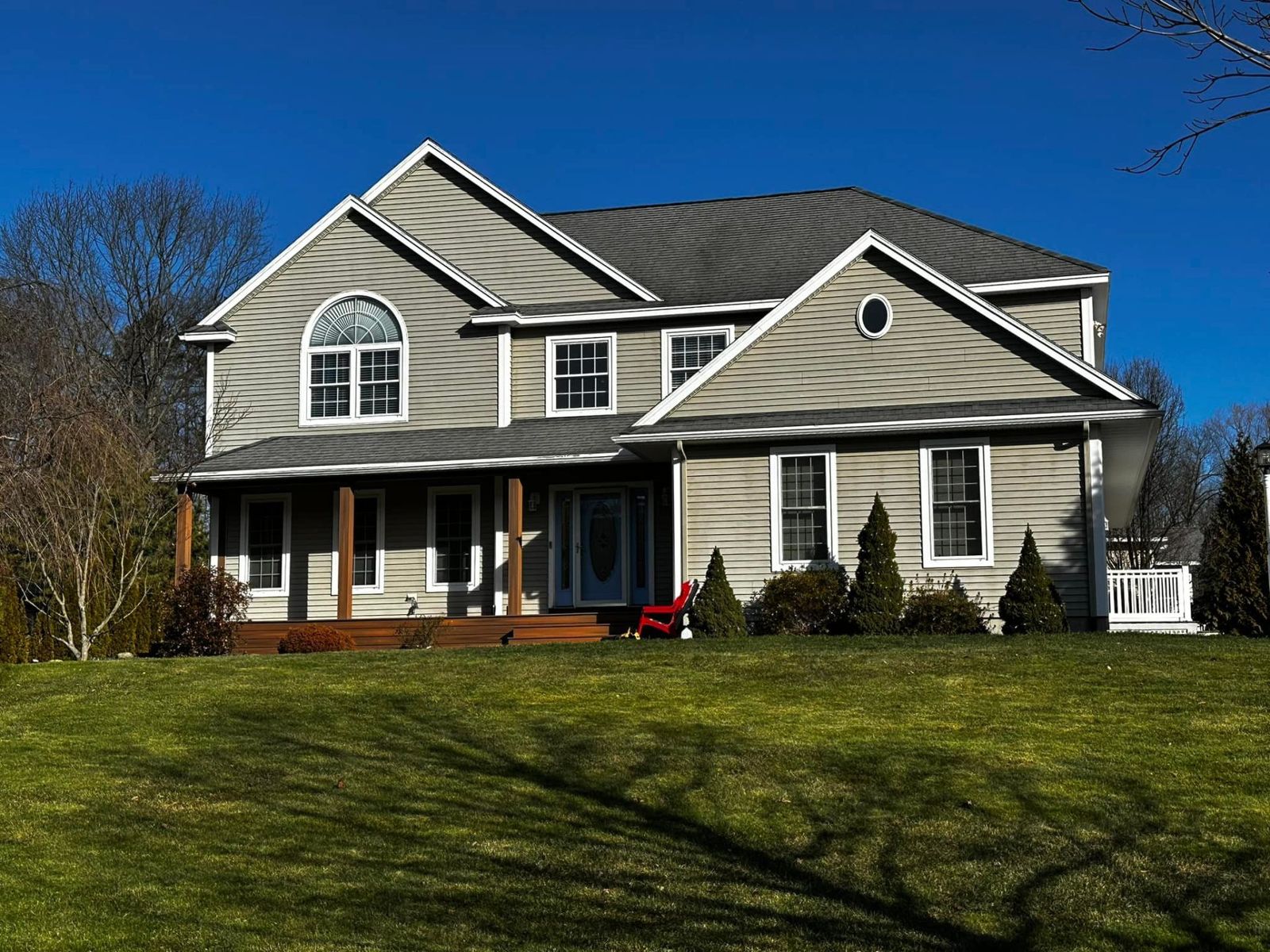
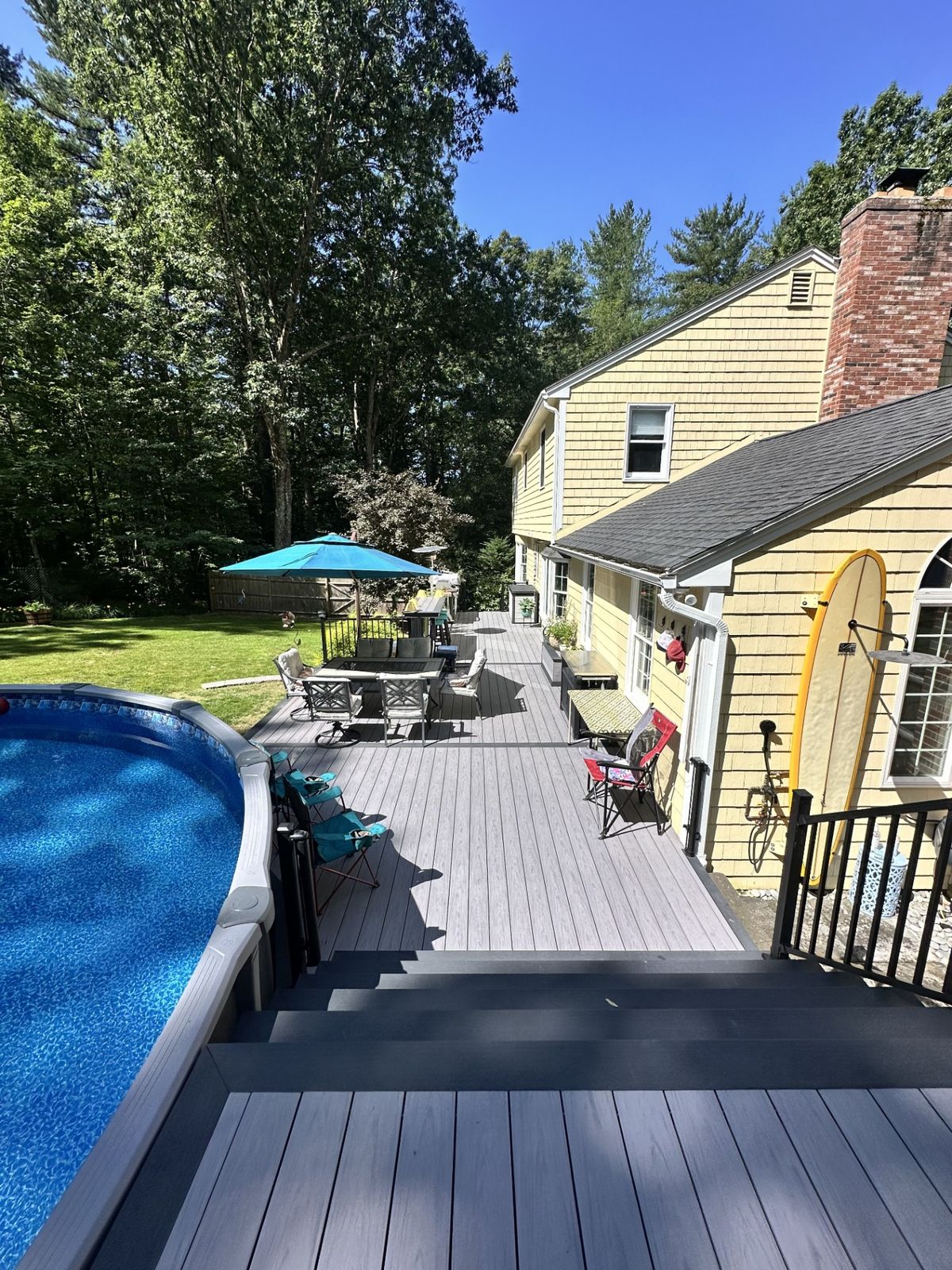
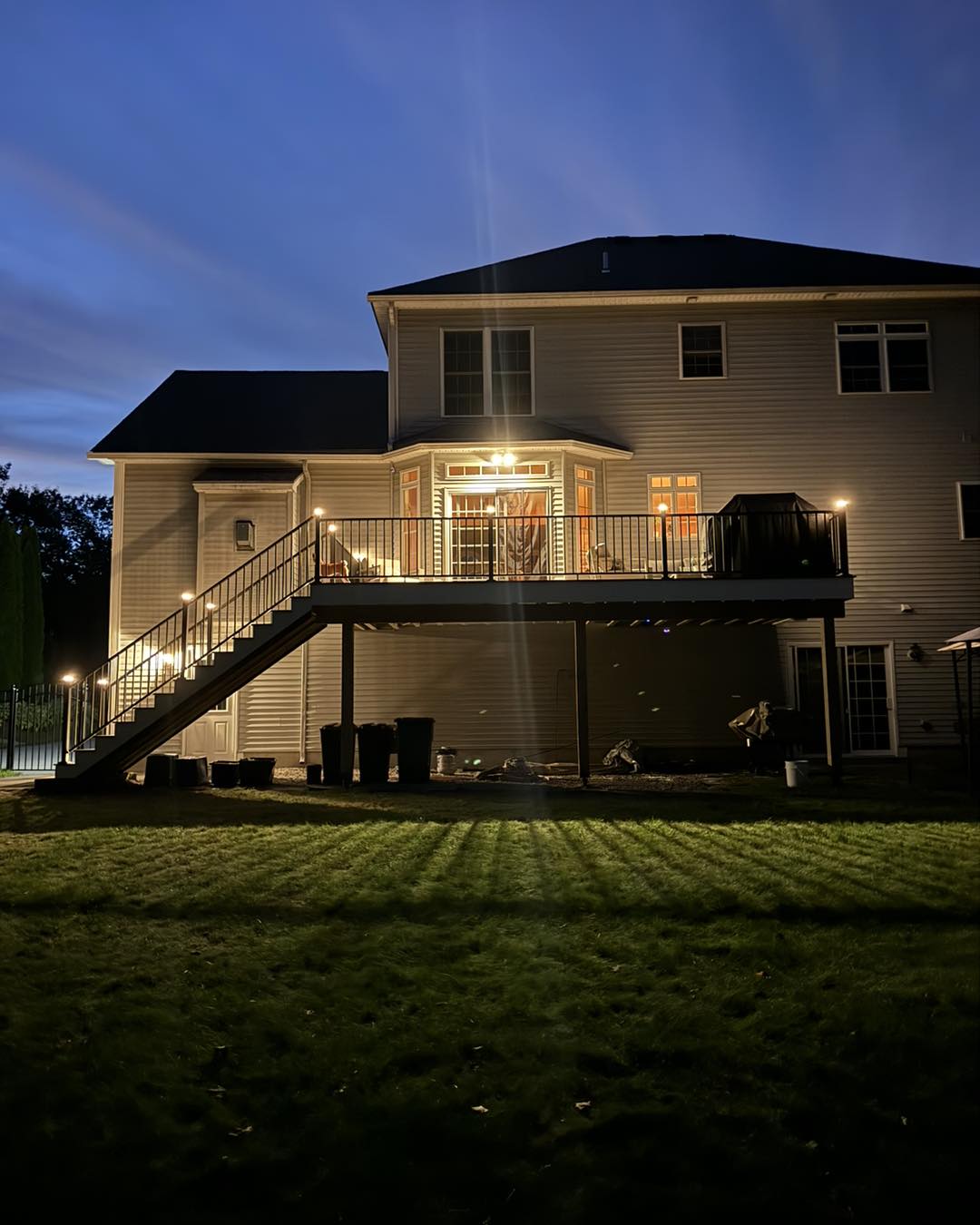
See how we've applied these principles on actual projects throughout Southern NH.
Want a detailed material comparison? See our full composite vs wood comparison →
Frequently Asked Questions
Get clear answers to common questions from homeowners in Derry, Londonderry, Salem and Windham. If you don't see your question here, we're happy to discuss it.
Questions About Your Specific Situation?
Every property has its own microclimate and use patterns. We're happy to discuss what makes sense for your deck—whether you're replacing an aging structure or building new.