
Deck Railings & Design Details
Railings do more than meet code requirements—they define your deck's character, frame your views, and protect everyone who uses the space. Here's what to consider when choosing the right system for your project.
Why Railing Selection Deserves Serious Consideration
Railings are often an afterthought—picked late in the design process or defaulted to whatever the contractor suggests. But they impact three critical aspects of your deck.
Safety & Code Compliance
Height, spacing, and strength requirements vary by application and location. Get these wrong and you fail inspection—or worse, someone gets hurt.
Visual Impact
Railings occupy more vertical real estate than any other deck element. They frame every view from (and of) your deck.
Tactile Experience
You touch the railing every time you use the stairs. The feel of a chunky wood top rail vs. slim aluminum vs. warm composite matters.
Railing Materials Compared
Each railing material has distinct advantages and trade-offs. Here's what you need to know about each option.
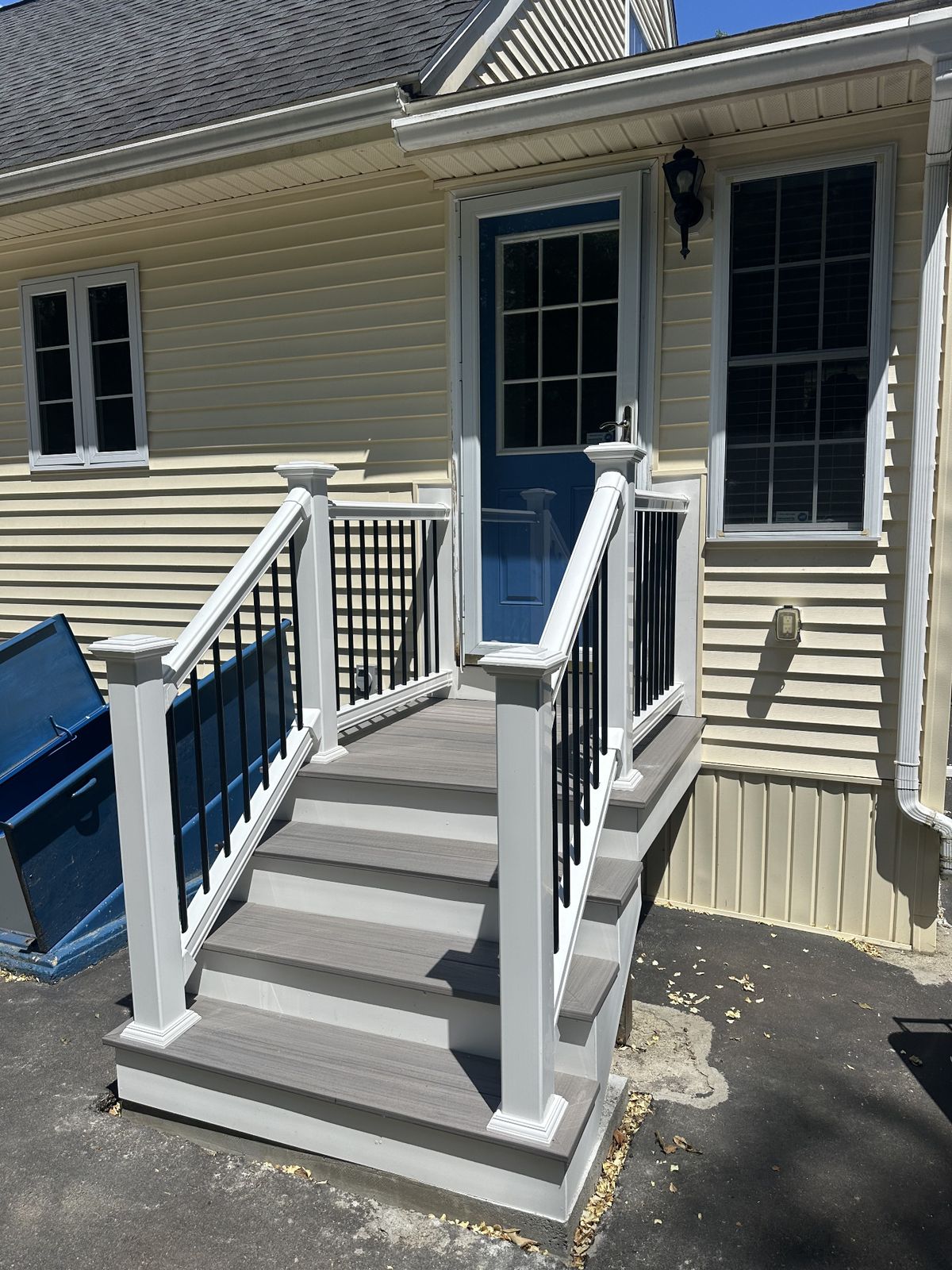
Aluminum Railings
The workhorse of modern deck railings. Available in traditional and contemporary profiles.
Advantages
- Zero maintenance—won't rot, rust, or fade
- Clean modern or traditional profiles
- Code-compliant out of the box
- Excellent for coastal/harsh environments
Considerations
- Can feel cold to touch in winter
- Shows fingerprints (dark colors)
- Premium cost vs. wood
Best for: Low-maintenance projects, coastal locations, modern aesthetics
Pairs with: Composite decking, any surface material
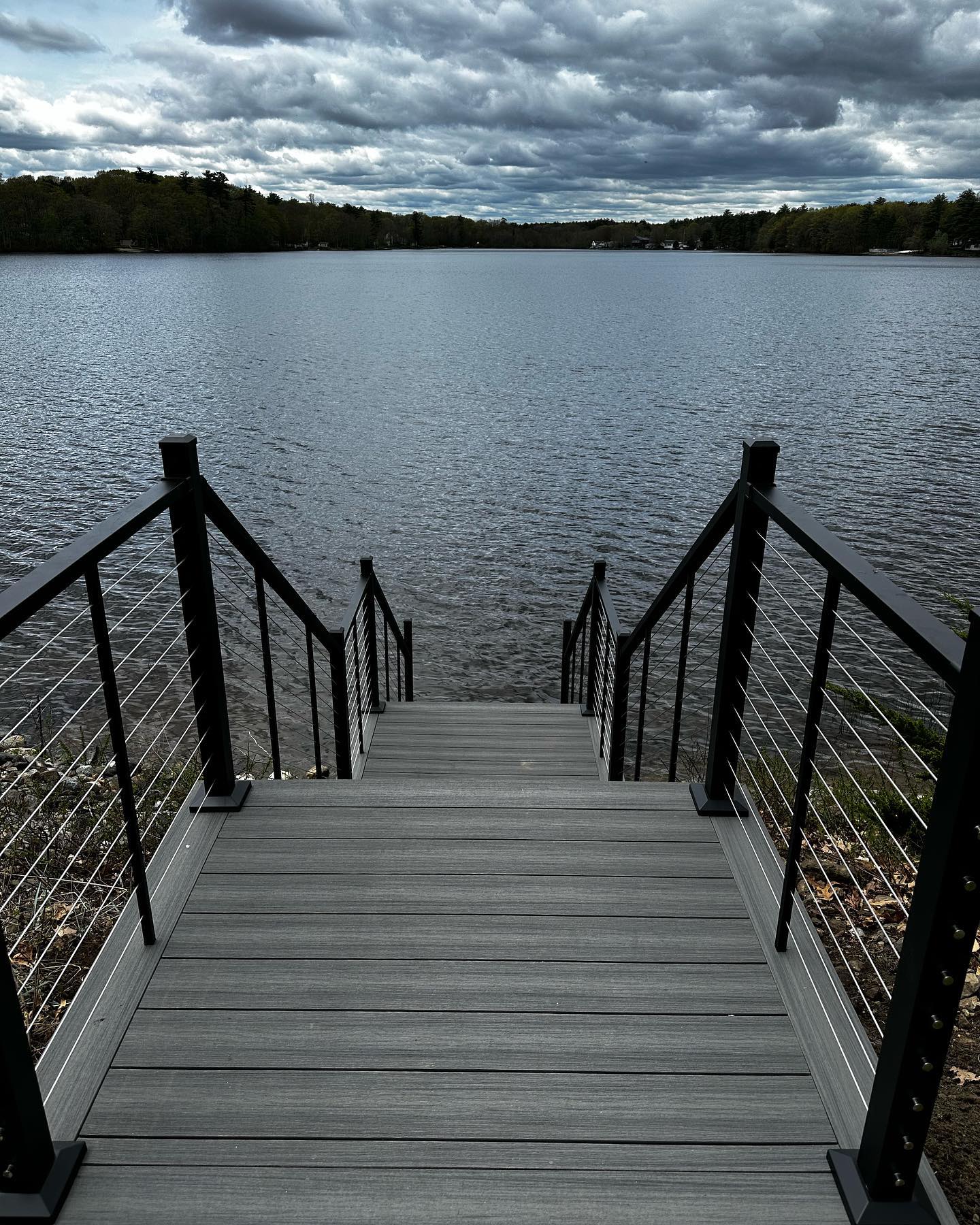
Cable Railings
Horizontal or vertical stainless steel cables create a minimal, contemporary look.
Advantages
- Maximum view preservation
- Contemporary aesthetic
- Extremely durable stainless steel
- Minimal visual obstruction
Considerations
- Requires precise spacing calculations
- Horizontal lines can feel industrial
- Not ideal for young children (climbable)
Best for: Waterfront properties, scenic locations, modern architecture
Spacing requirements are strict—4" max sphere rule still applies
Wood Railings
Traditional cedar or pressure-treated wood offers natural warmth and customization.
Advantages
- Natural warmth and character
- Can match deck surface exactly
- Fully customizable profiles
- Lower initial cost
Considerations
- Requires same maintenance as wood decking
- Will weather and check over time
- Needs periodic refinishing
Best for: Traditional aesthetics, matching wood decks, budget-conscious projects
Pairs with: Wood decking, rustic/farmhouse styles
Composite Railings
Match your composite deck with coordinated railing systems from the same manufacturer.
Advantages
- Match composite deck colors exactly
- No painting or staining ever
- Consistent appearance over time
- Warmer touch than aluminum
Considerations
- Higher cost than wood
- Limited profiles compared to aluminum
- Color matching between manufacturers difficult
Best for: Cohesive look with composite deck, low-maintenance preference
Pairs with: Composite decking (obviously), but works with any surface
Glass Panel Railings
Tempered safety glass panels provide unobstructed views and wind protection.
Advantages
- Completely unobstructed views
- Premium, high-end appearance
- Wind protection without blocking sightlines
- Creates enclosed feeling while feeling open
Considerations
- Highest cost option
- Requires regular cleaning
- Complex installation
Best for: Waterfront/view properties, high-end projects, wind-exposed locations
Requires tempered safety glass, specific mounting hardware
Mixed/Hybrid Systems
Combine materials to balance aesthetics, durability, and budget.
Advantages
- Best of multiple worlds
- Composite top rail + aluminum balusters = warmth + durability
- Wood posts + cable infill = traditional meets modern
- Customize to your priorities
Considerations
- More complex installation
- Requires careful material coordination
- Some combinations may look disjointed
Best for: Custom projects where single material doesn't meet all needs
Pairs with: Any decking—the flexibility is the point
Code & Safety Requirements
Building codes exist to protect people. Understanding requirements for your specific project type prevents costly redesigns and failed inspections.
Residential Deck Rails
- Minimum 36" height (some jurisdictions require 42")
- Maximum 4" sphere gap (baluster spacing)
- Must withstand 200 lb. concentrated load
- Graspable handrail required on stairs
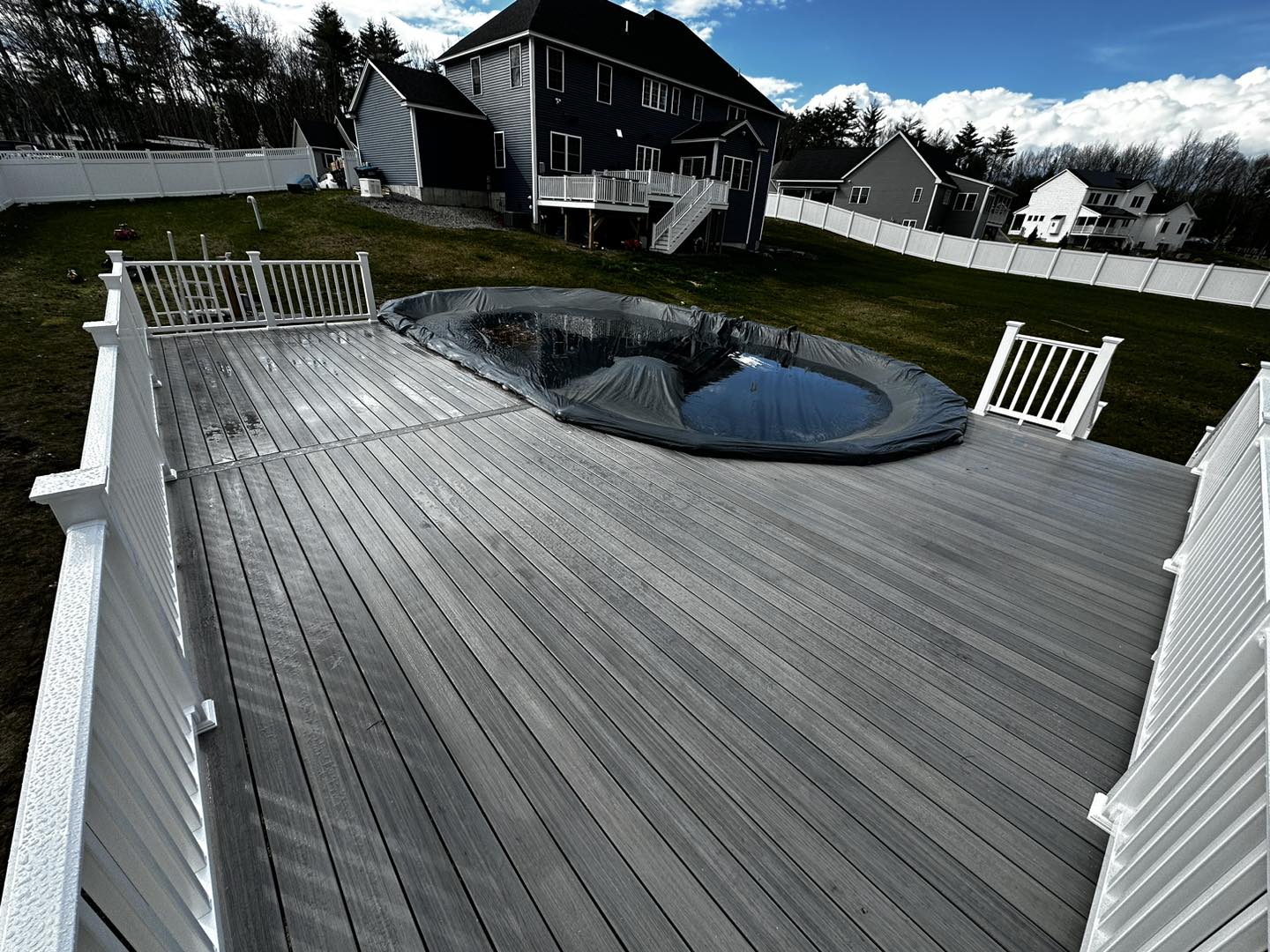
Pool Barrier Requirements (NH)
- Minimum 48" height
- No gaps larger than 4"
- Self-closing, self-latching gates
- Gates must open away from pool
- No horizontal elements that create climbing surfaces
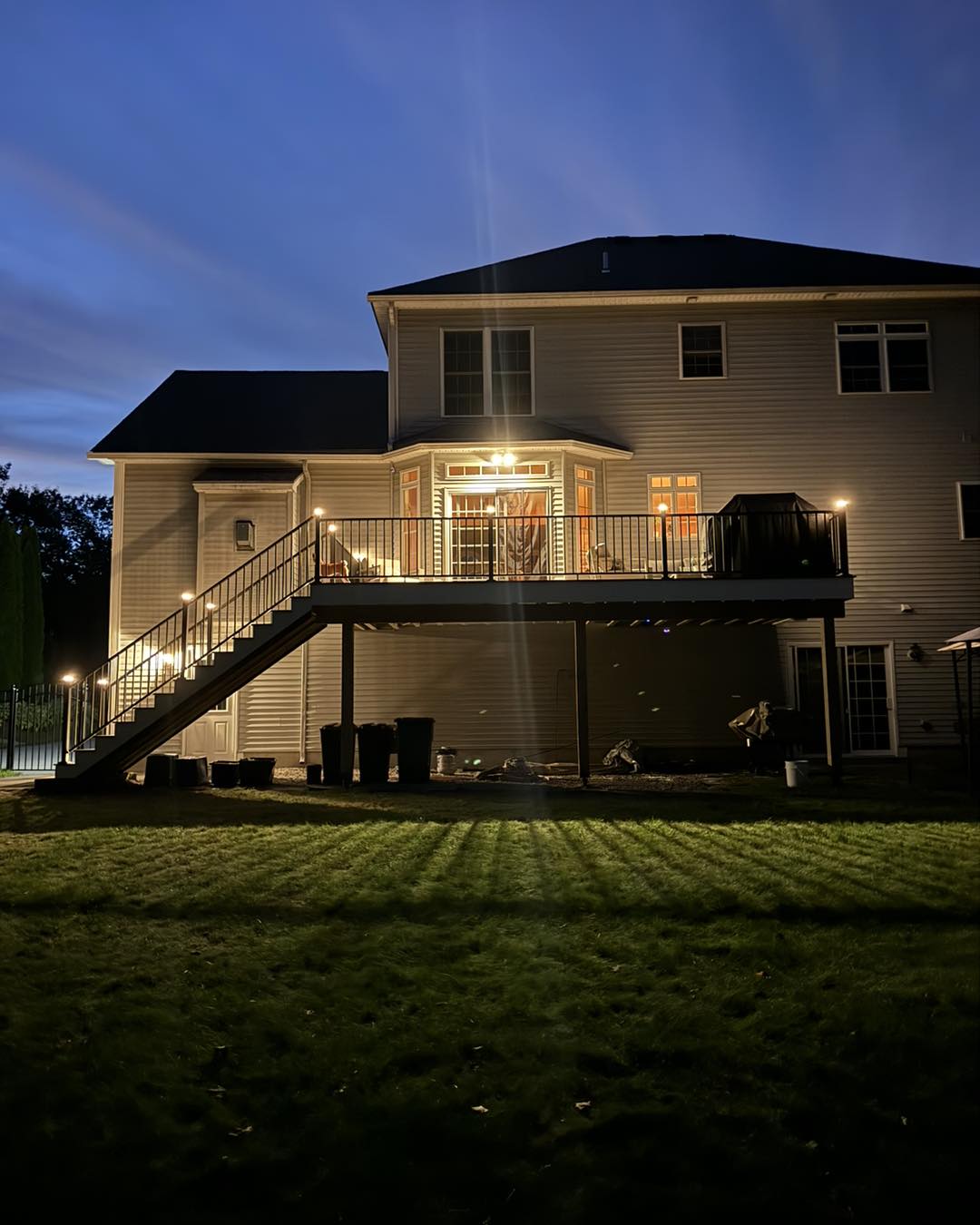
Elevated Decks
- 42" railing often required above certain heights
- Engineering certification may be needed
- More stringent fastening requirements
- Structural connection to framing essential
Stair Handrails
- Handrail height between 34-38" from stair nosing
- Continuous graspable surface
- Must extend beyond top and bottom risers
- Returns or terminals to prevent catching
Additional Safety Considerations
How Railings Shape Your Deck's Character
The right railing can elevate a simple deck; the wrong one can undermine even premium decking. Consider these design elements.
View Preservation vs. Definition
Cable and glass maximize views but the deck feels less defined. Solid balusters frame views but can feel enclosing. Consider glass on view side, solid on house side.
Color & Finish Coordination
Dark railings on light decks read contemporary. Matching tones feel cohesive and traditional. White railings work on any deck and read as classic and timeless.
Post Placement & Lighting
Posts are lighting opportunities—post caps and integrated LEDs extend usable hours. Plan for regular spacing vs. designed focal points.
Level Changes & Stair Design
Consider continuous railing lines vs. stepped sections. Handrail transitions at landings and gate placement for access control matter.
Choosing Railings for Your Project Type
Different projects have different requirements. Here's what works best for common scenarios.
Pool Deck or Wet Environment
Recommended: Aluminum with composite cap rail, or glass panels
Avoid: Wood (moisture damage), horizontal cables (climbing hazard)
Elevated/Multi-Level Deck
Recommended: Engineered aluminum or composite systems
Also consider: Glass panels for dramatic views
Traditional/Historic Home
Recommended: Wood or composite with traditional profiles
Also consider: Paint-grade wood for white rails
Avoid: Cable (too modern), glass (wrong era)
Modern/Contemporary Home
Recommended: Aluminum or cable systems, glass panels
Also consider: Minimal profiles, horizontal lines
Avoid: Ornate balusters, bulky wood posts
Railing Details from Our Projects
See how railing choices work in real New England installations.
Frequently Asked Questions
Get clear answers to common questions about deck replacement in Southern New Hampshire. If you don't see your question here, we're happy to discuss it.
Planning a Project That Requires Careful Railing Design?
Multi-level decks, pool surrounds, and elevated structures all demand thoughtful railing selection. We're happy to discuss options during a consultation—no pressure, just practical guidance.